

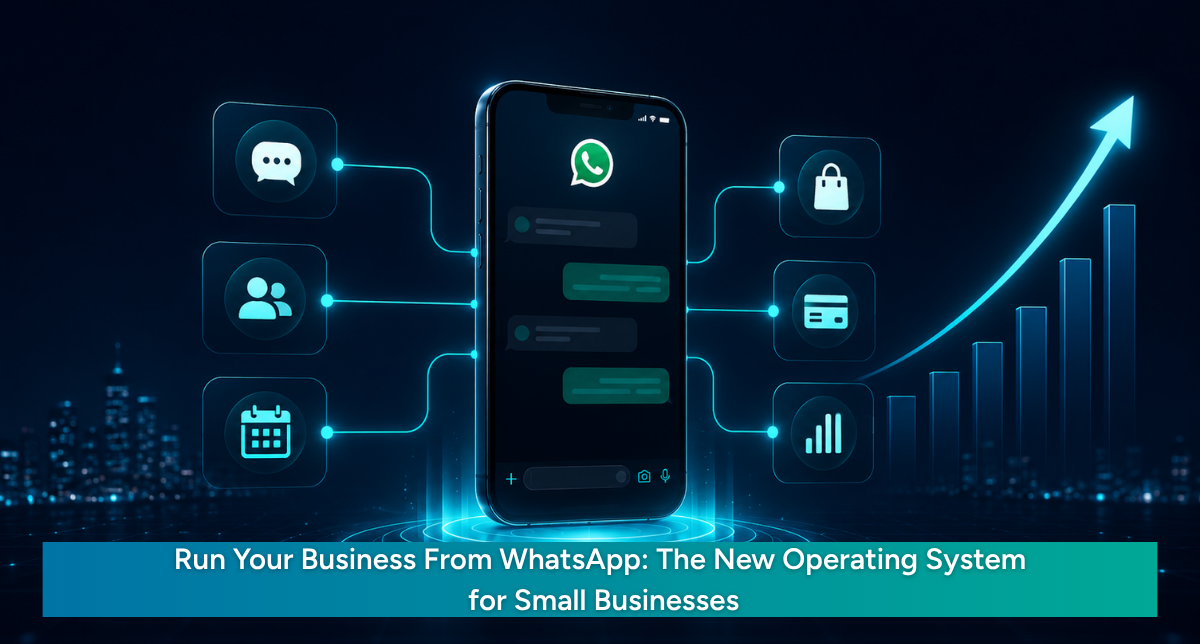
Introduction: WhatsApp Has Become the Business Front Desk
Ask any small business owner where their customers actually talk to them, and the answer usually isn’t email or a contact form. It’s WhatsApp.
People send a quick “hi, is this available?” instead of filling out a form. They ask for pricing mid-scroll, request an appointment, follow up a few days later, share a document, place an order, or ask for support — often before they’ve spoken to anyone on the team.
WhatsApp has quietly become the front desk for a huge number of small businesses. But when it becomes the main business channel, it needs structure behind it. Without one, leads get buried, replies get duplicated or missed, and nobody can quite say who’s following up with whom. This blog looks at what it actually takes to run sales, support, follow-ups, appointments, and reporting through WhatsApp — and where a CRM and a bit of automation start to matter.
Table of Contents
Why WhatsApp Became the Business Hub
Customers Prefer Quick Conversations
WhatsApp feels familiar and low-friction. No forms, no logins, no hold music. Just a message, typed into an app that’s already open on their phone.
Businesses Can Respond Faster
Teams can share pricing, brochures, booking links, and updates in seconds, instead of waiting on email threads or in-person visits to catch someone up.
It Works Well for Local and Founder-Led Businesses
Clinics, consultants, educators, service providers, product sellers, and training centers can all manage first-level communication through WhatsApp. It’s a natural fit for businesses built on personal trust, where talking to a founder or a familiar team member feels different from filling out “contact us” on a website.
Sales: Managing Enquiries and Conversions Through WhatsApp
Enquiries rarely come from one place. Someone finds you through the website, someone else clicks an ad, another person messages after seeing a post on social media or your Google Business Profile — and if things are working the way they should, they all land in WhatsApp.
From there, a working sales process comes down to a few simple habits:
- Send service details, pricing, catalogs, or booking links quickly, while interest is still fresh
- Keep track of which enquiries are moving toward a decision and which have gone quiet
- Make sure nothing gets promised twice, or forgotten entirely
Most businesses don’t lose sales because enquiries stop coming in. They lose them because there’s no easy way to see where each one actually stands.
Support: Handling Customer Questions Better
Most customer questions repeat themselves — timings, pricing, availability, how something works. Templates and a bit of automation can answer these instantly, which frees up the team for conversations that genuinely need a person.
Order updates, appointment instructions, course details, and general service information can go out without anyone retyping the same message for the hundredth time. And when something more important or sensitive comes up, it can be escalated to the right team member instead of sitting in a general inbox.
Follow-Up: Turning Interest Into Action
Many customers don’t decide after the first message. They ask a question, think it over, get pulled into their day — and either forget entirely or wait for a nudge that never comes.
A simple, consistent follow-up reminder is often the difference between a lead that converts and one that quietly disappears. Lead follow-up automation, in particular, helps businesses stay on top of this without relying on memory, and cuts down on the number of enquiries that fall through the cracks simply because nobody circled back in time.
Team Communication: Giving Ownership to the Right Person
WhatsApp gets confusing fast once more than one person is replying to customers. A lead might get two different answers, or no answer at all, because everyone assumed someone else had it covered.
A WhatsApp CRM fixes this by making ownership visible: leads get assigned to a specific person, status is visible to the whole team rather than just whoever replied last, and duplicate replies or dropped conversations become far less common. In short, everyone knows exactly who owns each enquiry — which starts to matter a lot more as the team and the enquiry volume grow.
Appointment Management Through WhatsApp
For clinics, consultants, and service businesses built around bookings, WhatsApp can carry the entire appointment journey from start to finish.
A confirmation goes out the moment a booking is made. Location, preparation instructions, or consultation details are shared ahead of time. A friendly reminder lands the day before, so fewer people simply forget to show up. And a follow-up message after the visit or session closes the loop properly, instead of leaving things hanging.
Reporting: What Founders Should Track
Running a business through WhatsApp without any reporting means real patterns go unnoticed. At a minimum, it helps to have visibility into:
- Number of WhatsApp enquiries
- Lead source
- Response time
- Follow-up status
- Conversion rate
- Lost lead reasons
- Team handling status
None of this needs to be complicated. It just needs to live somewhere outside individual chat threads, where someone can actually look at it.
Limitations of Running Business Only From WhatsApp
Chats Can Get Buried
Without a CRM layered on top, older leads simply sink to the bottom of the chat list and get forgotten, especially once volume picks up.
Data Is Not Always Structured
Lead source, current status, and eventual outcome often live nowhere except in someone’s memory, which makes it hard to know what’s actually working.
Team Accountability Can Become Weak
When everyone can reply to everyone, ownership gets fuzzy fast. A lead that “the team” is handling is often, in practice, a lead nobody is handling at all.
Best Practices for WhatsApp Operations
- Connect WhatsApp with a CRM or lead tracker
- Use message templates for common, repeated replies
- Tag leads by interest, source, or status
- Set follow-up reminders instead of relying on memory
- Review enquiry reports weekly
- Keep human support for serious or sensitive conversations
Conclusion
WhatsApp can become a genuine operating system for small businesses — for sales, support, appointments, and follow-ups. But it needs structure, tracking, and a bit of automation behind it to actually support growth. With the right setup in place, WhatsApp helps businesses manage enquiries, support, and reporting with far less chaos than a chat app was ever really designed to handle on its own.
Let's set up a WhatsApp CRM so every enquiry gets tracked, followed up, and converted — without living in your chat list.