

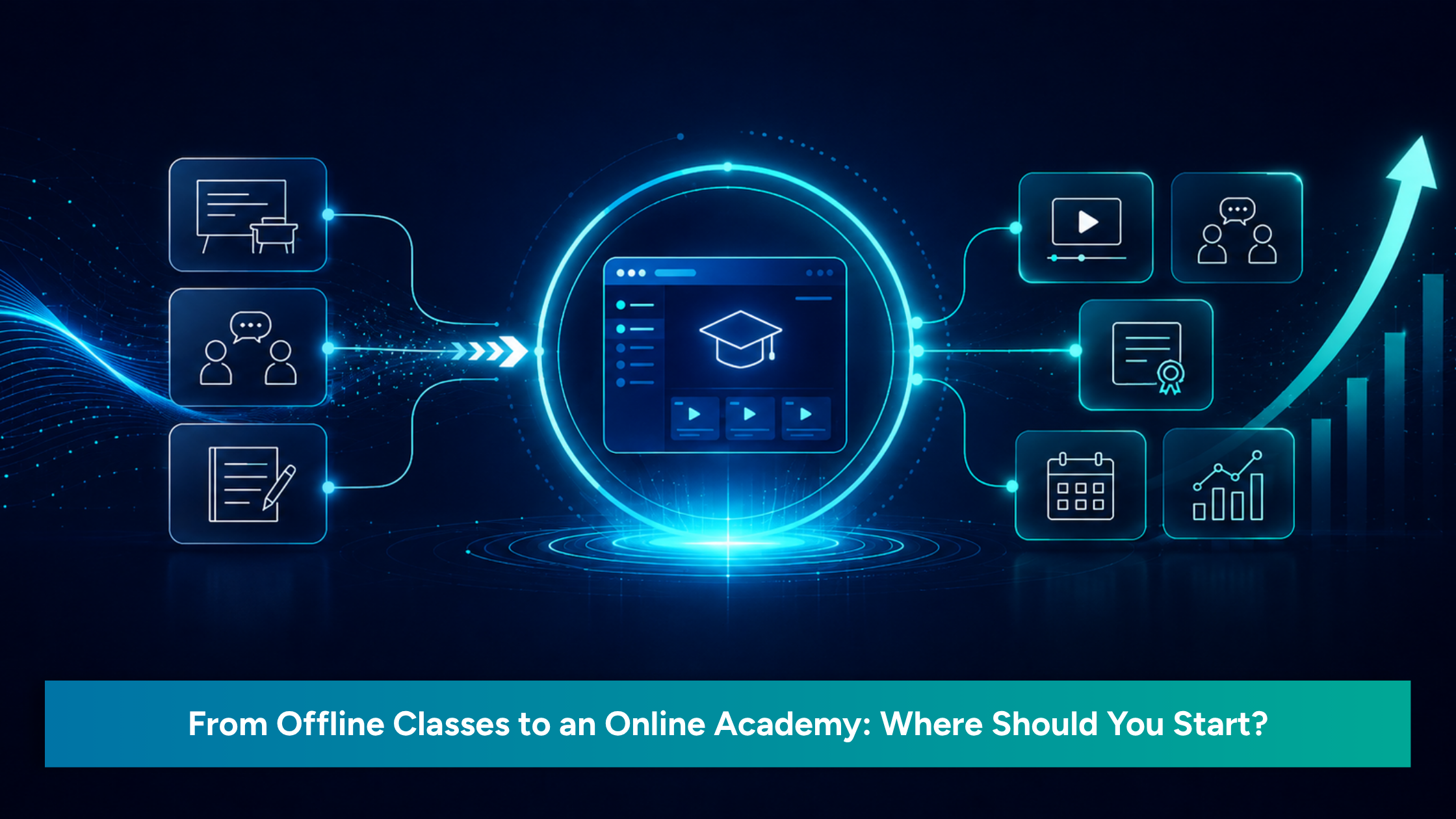
Moving a class online involves more than recording lessons and uploading them. In a classroom, an educator can spot confusion, change the pace and answer questions as they arise. Online, the course itself must guide learners through moments when the educator is not present.
The best place to start is with the teaching method: what the learner should achieve, how the lessons should progress and where personal guidance still matters. An online course platform can deliver the programme, and online course platform development is worth considering only when the teaching model needs custom workflows. The technology should support those decisions, not make them for you.
Imagine Meera, a hypothetical spoken-English tutor who runs a six-week weekend class. The stages below show how that same course could move online without losing the guidance that makes it useful. For a broader view of the complete business model, read our guide to creating an online academy from your expertise.
Table of Contents
Stage 1: Teaching Offline
Start with one programme you already understand. Do not copy the timetable; identify what makes the class work.
Ask:
- What should learners be able to do by the end?
- Which lessons must come before others?
- Where do learners usually need a demonstration, correction, or explanation?
- Which questions and support needs appear repeatedly?
Note the small decisions you make naturally—rephrasing a difficult idea, checking an exercise, or adding practice after a common mistake. Each needs a place online. For Meera, this shows where her direct involvement matters.
Stage 2: Creating Digital Content
Structuring the Teaching Method
Meera may record grammar and vocabulary, while pronunciation practice and feedback remain live. Short exercises support practice between classes. This teaching map becomes the brief for the content, platform and support process.
Recording Lessons
Adapt classroom material for people learning without a teacher in the room. Long recordings, side conversations and incomplete instructions can make lessons hard to follow.
Meera could turn each topic into a short explanation, an audio task and one clear learner action. A weekly live session could focus on speaking practice and feedback. Clear audio, readable visuals, captions and mobile-friendly resources matter more than an elaborate studio.
Stage 3: Choosing the Right Platform
Compare platforms after the delivery model is clear. Check lesson formats, logins, assessments, payments, progress tracking, communication, and ease of administration.
For Meera, a configured platform may be enough for videos, practice files, and live-session links. If the programme needs a custom review process for learner submissions, access rules, or integrations, online course platform development may be more suitable. The choice should follow the way the course works, rather than a long feature list.
Consider ongoing effort as well as initial cost. The team should be able to add lessons, manage access, and handle routine questions without technical support.
Stage 4: Building Your Website
The learning platform delivers the course. The website helps a prospective learner understand the offer and decide whether to enroll.
Meera’s course page should explain the level, outcome, curriculum, schedule, format, support, price, and next step. It should connect registration or payment to confirmation, login details, the first lesson, and a clear support route. A focused academy website and enrolment flow make this journey easier to follow.
Stage 5: Launching
Before wider promotion, test the full experience from a learner’s phone: open the course page, complete payment or registration, check confirmation, log in, find the first lesson and use support.
Meera could invite current or past learners to try it. Their questions may reveal unclear instructions, missing resources, or access problems. Fix those before wider promotion. Ask where they paused, what they expected next, and whether they knew how to get help—not simply whether they liked the course.
Growing Beyond One Course
Once the first course runs reliably, use learner behavior to guide the next step. Completion patterns, recurring questions and support requests are more useful than adding courses just to enlarge the catalog.
Meera may find demand for an advanced conversation course, live practice group or membership. Automation can handle routine confirmations and reminders, while personal feedback remains human. A structured learning and community journey keeps these touchpoints connected as the academy grows.
Move Online Without Losing What Makes Your Teaching Work
Start with the learner outcome and teaching method. Once those are clear, content, platform, website, enrolment, and launch can support the experience in a more organized format.
Lamppost Digital helps educators, trainers, and growing academies connect these parts into a practical online academy setup built around the teaching model. Ready to plan the transition? Book an Academy Growth Consultation and identify the right first phase for your classes.
Frequently Asked Questions
How do I move offline classes online?
Move one programme online first. Define its learner outcome, sequence, and support needs, then separate the recorded lessons, live guidance, practice, and feedback. Connect those pieces through the platform and enrolment flow, and test the journey with a small group before promoting it more widely.
Which platform is suitable?
A suitable platform should support the way learners receive and complete the programme. For a straightforward course, videos, practice files, logins, payments and live-session links may be enough. If you need custom submission reviews, access rules or integrations, choose a solution that can support those workflows.
Do I need a separate website?
A separate website is not always necessary. If an existing site can explain the course and guide learners through registration or payment, keep the setup simple. Build or improve a course page when you need clearer discovery, enrolment, and trust before learners reach the platform.
Turn your teaching into an online academy with the right plan. Ready to get started?