

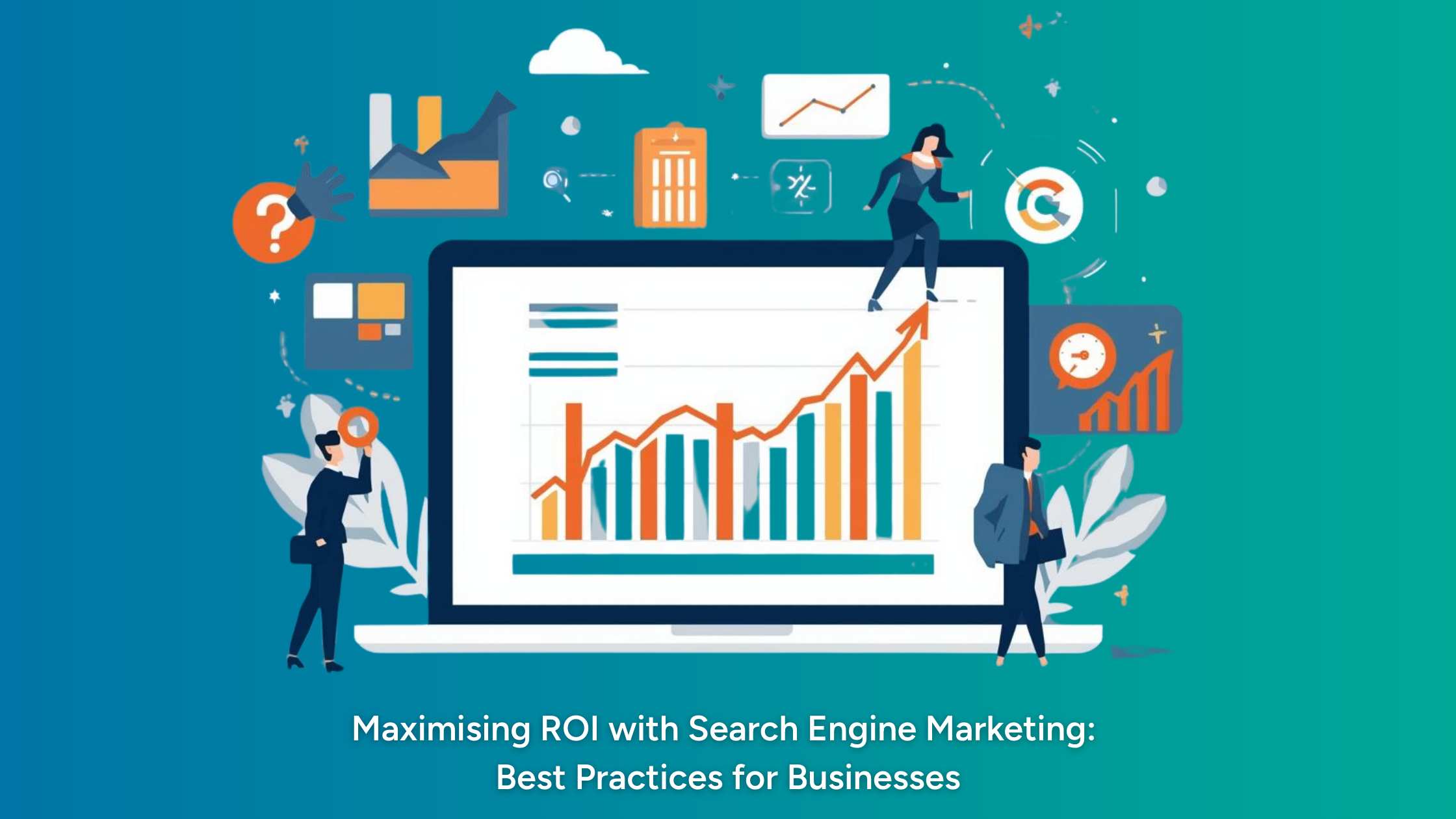
In Trichy’s competitive digital landscape, most businesses aren’t trying to “run ads.” They’re trying to answer one simple question:
How do we get better leads and real inquiries – without wasting budget?
Search Engine Marketing (SEM) is one of the fastest ways to build visibility and demand because it places your business in front of people exactly when they’re searching. But SEM ROI doesn’t improve by increasing spend. It improves when your ads, landing pages, tracking, and follow-up work like a connected system.
At Lamppost Digital, we look at SEM as more than ad delivery. We treat it as a conversion engine – designed to turn searches into inquiries, calls, WhatsApp messages, bookings, and sales.
Table of Contents
What SEM Means (And Why It Works in Trichy)
SEM is paid search advertising that helps your business appear at the top of search results when people look for a product or service you offer.
Unlike broad awareness campaigns, SEM targets intent. That’s what makes it powerful for Trichy businesses – whether you’re in manufacturing, education, healthcare, retail, real estate, or professional services.
The biggest advantage is simple: your brand shows up when the customer is already looking.
What SEM Means (And Why It Works in Trichy)
Customers today rarely decide instantly. They search, compare, read reviews, check websites, and then inquire. When you show up in that moment, you don’t need to “convince” people to care – you just need to guide them to the next step.
SEM gives you:
- Immediate visibility
- Budget control
- Measurable performance
- Local targeting
- Fast testing and optimization
ROI in SEM: The simple definition that matters
SEM ROI is not “more clicks.” It’s more outcomes.
Depending on your business, the outcome could be:
- WhatsApp clicks
- Phone calls
- Form submissions
- Appointment bookings
- Purchases
A high-ROI SEM campaign is one that brings the right clicks, not just more clicks.
Before we get into best practices: the 3 common SEM leaks
If your SEM isn’t performing, it’s usually one of these:
- Wrong intent traffic (your ads appear for irrelevant searches)
- Landing page mismatch (ad promise ≠ page experience)
- Weak follow-up system (leads come in, but conversion drops later)
Fixing these often improves ROI faster than creating new campaigns.
Comprehensive Best Practices to Maximize Your SEM ROI
Establish clear goals and define success metrics.
Start with clarity: what does “success” mean for your business?
- Qualified leads?
- Phone inquiries?
- Bookings?
- Sales?
Then choose KPIs that match your goal:
- CTR (to measure ad relevance)
- Conversion rate (to measure landing page + offer)
- CPL/CPA (to measure lead cost)
- ROAS (for e-commerce)
- Lead-to-sale conversion (the real business KPI)
When goals are clear, optimization becomes straightforward.
Do intent-based keyword research (and protect budget with negatives).
Keyword research is not about “high volume.” It’s about high intent.
Include:
- Service + location: “SEM agency Trichy,” “Google Ads services Trichy”
- Action keywords: “pricing,” “quote,” “consultation,” “near me”
- Long-tail intent: “lead generation ads for [industry] in Trichy”
Also, build a negative keyword list early to prevent wasted spending:
- jobs, training, courses, free, meaning, pdf, etc.
This one habit alone can reduce irrelevant clicks drastically.
Craft ad copy that feels like the customer’s thought.
People click ads that sound like what they’re already thinking.
Strong ads do three things:
- reflect the user’s intent
- show a clear outcome
- Make the next step obvious.
Use:
- Benefit-led headline (not just “best agency”)
- Local trust cues (where relevant)
- Specific CTA (Call / WhatsApp / Book / Get Quote)
- Ad extensions (sitelinks, callouts, location)
A/B test regularly. The best ad copy isn’t guessed—it’s proven.
Optimize landing pages for conversions (the real ROI lever).
Landing pages are where SEM either becomes profitable or expensive.
Your landing page should:
- match the ad promise immediately (“message match”)
- load fast on mobile
- have one primary CTA
- Include trust near CTA (reviews, proof, logos, outcomes).
- Keep forms short (remove friction).
- clearly explain “what happens next”
If you want SEM ROI to rise, landing page CRO is non-negotiable.
Use location targeting strategically (not just “Trichy”).
If you serve specific zones or nearby areas, segment and tailor:
- radius targeting around key areas
- separate messaging for different areas if needed
- bid adjustments based on location performance
- exclude consistently low-performing areas
Hyper-local targeting improves relevance, and relevance improves ROI.
Implement ad scheduling based on real conversion patterns.
Not every hour performs the same.
Use data to:
- increase bids during high-performing hours
- reduce spending during low-intent periods
- Align ad delivery with business hours (if calls matter).
A smart schedule reduces wasted spending quietly—without changing your creative.
Use automation and analytics (but never run blind).
Automation is useful for efficiency:
- smart bidding based on conversion goals
- rules for pausing poor performers
- budget shifts toward winners
But it must be backed by:
- clean conversion tracking
- weekly search terms review
- landing page performance review
- device + location + audience insights
Automation supports strategy. It doesn’t replace it.
Add remarketing to convert “almost-ready” visitors.
Most visitors won’t convert on the first click. Remarketing brings them back.
Segment remarketing by behavior:
- visited service page
- clicked CTA but didn’t submit
- spent time on key sections
- abandoned cart (ecommerce)
Use sequential messaging:
- proof (testimonials/results)
- clarity (how it works)
- reassurance (FAQs)
- action (limited-time offer or consultation)
Remarketing often gives the best ROI because the audience already knows you.
The weekly SEM routine that improves ROI (simple and realistic)
If you do only one thing, do this weekly.
- Add negative keywords from search terms
- Pause keywords/ad groups that bring poor-quality leads.
- Test 1 ad variation (headline or CTA)
- Review landing page conversion rate
- Check lead quality (sales feedback)
- Shift budget toward winners
SEM is a compounding channel when maintained consistently.
The Lamppost Digital Advantage: Your Trichy SEM Partner
At Lamppost Digital, we don’t treat SEM as “ad running.” We build a connected performance flow:
Search intent → Ad relevance → Landing page conversion → Tracking → Lead follow-up → Outcomes
We typically support with:
- SEM strategy and campaign structure
- keyword + negative keyword planning
- conversion-focused ad copy
- landing page messaging and CRO alignment
- tracking and reporting clarity
- Lead follow-up systems (CRM/WhatsApp automation)
Take the next step toward higher SEM ROI.
If you’re spending on ads but results feel inconsistent, you likely don’t need “more ads.” You need a better system around them.
If you want SEM campaigns built for measurable outcomes (not just clicks), explore:
Or if you want a structured growth system connecting ads, landing pages, and follow-up:
Let’s make every click count and every rupee work harder.
Related Posts
Automation Should Begin After You Understand the Customer Journey
Automation works best when the customer journey is clear. Learn how to identify repetitive tasks, define responsibilities, and build a business automation strategy that improves enquiry handling and follow-up.
How Should a Small Business Start Using CRM Without Adding More Work?
A CRM often fails in a small business for a simple reason: it is introduced as another system the team